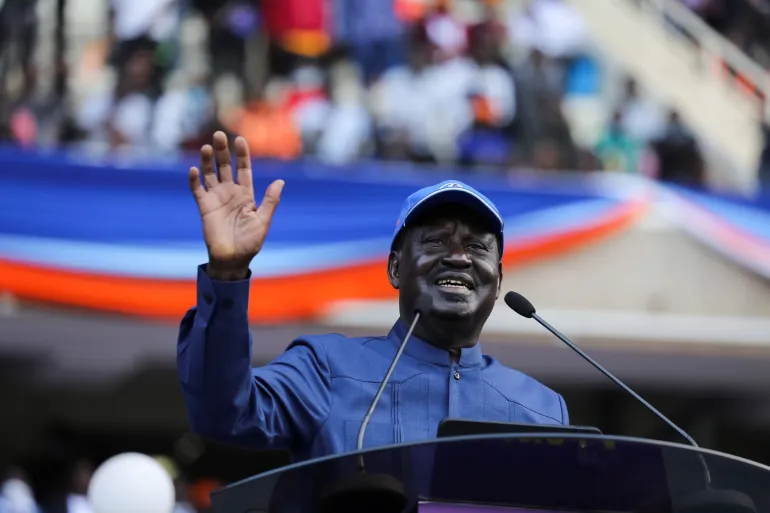
Raila Amolo Odinga

Raila Odinga, one of Kenya’s most influential political leaders and democracy champions, passed away on 15th October 2025 at the age of 80 while receiving treatment in India. Son of Kenya’s first Vice President, Jaramogi Oginga Odinga, Raila spent his life fighting for democracy, justice, and nation

Holgah Mband
Oct 21, 2025
22 views
5 min read
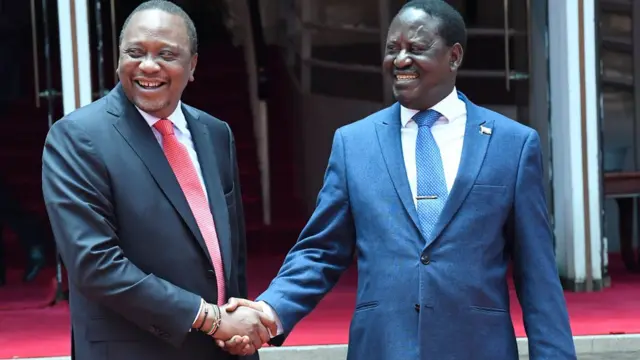
A Tribute to a Nation-Builder On 15 October 2025, Kenya bid farewell to one of its most influential political figures, Raila Amolo Odinga, at the age of 80. His passing marks the end of a remarkable chapter in Kenya’s political history — a chapter defined by struggle, persistence, reform, and, above all, hope. Early Life and Roots Born in Kisumu County in 1945, Raila Odinga was the son of Jaramogi Oginga Odinga, Kenya’s first Vice President and a pioneer of the independence movement. His upbringing was steeped in political activism and a deep sense of public service. The legacy of his father shaped much of his outlook: that freedom, dignity and justice should extend to all Kenyans. Raila studied in East Germany, gaining engineering and technical experience, before returning to Kenya where he plunged into public life. From his early days, he inherited both the privileges of his family background and the burdens of expectation. From Opposition Firebrand to Statesman Raila’s political journey was far from smooth. Under the authoritarian rule of Daniel arapping Moi, he was detained without trial for several years after the failed 1982 coup attempt, a crucible that sharpened his resolve. When Kenya returned to multiparty politics in the early 1990s, Raila emerged as a leading voice of reform, representing the constituency of Lang’ata and advocating for democracy, accountability, and decentralisation. His persistence paid off — he became a Member of Parliament in 1992 and went on to contest the presidency five times (1997, 2007, 2013, 2017 and 2022) without ever winning the top seat. In 2008, following the disputed 2007 election and the ensuing violence, Raila entered into the national unity government and served as Prime Minister until 2013 — a landmark period during which Kenya adopted its 2010 Constitution. His role in steering the country through a crisis and toward reform secured his place as a transformative figure. A Legacy of Reform, Reconciliation and Pan-African Vision Raila Odinga’s legacy encompasses several key pillars: 1. Democracy & Inclusion Raila was known for championing multiparty democracy, challenging entrenched one-party rule, and giving voice to Kenya’s marginalised regions and communities. His efforts helped change the political narrative in Kenya. 2. 2010 Constitution & Institutional Reform Under his premiership, Kenya adopted a constitution that promised stronger checks and balances, devolution of power, and greater citizen participation. This remains one of his most tangible achievements. 3. Reconciliation & “The Handshake” In 2018, Raila and then-President Uhuru Kenyatta triggered a political détente often referred to as “the handshake,” signalling a shift from bitter rivalry toward cooperation. This demonstrated his capacity to transcend opposition and seek unity. 4. Pan-African Commitment Beyond Kenya’s borders, Raila was an advocate for African integration, peace and diplomacy. His reputation extended across the continent and he was often cited as a statesman who saw Kenya’s future as linked to Africa’s future. Final Days & National Mourning Raila Odinga passed away in India, where he had travelled for medical treatment. He suffered a sudden cardiac arrest during a morning walk on 15 October 2025. His death was followed by a state funeral, a week of national mourning, full military honours and large crowds paying their respects across Kenya. Impact and What It Means for Kenya His passing leaves a leadership vacuum — especially among opposition forces — and raises questions about Kenya’s political direction ahead of the 2027 election. He was a unifier in a divided political landscape; his absence will be deeply felt. For many Kenyans, Raila was known affectionately as “Baba” — father of the nation, father of the people. He resonated not just through formal titles but through his connection with grassroots, his persistent fight for fairness, and his visible presence in public life. In Memory Raila Odinga’s story reminds us that leadership is not merely about holding power — it is about **what you do with it, how you serve, how you reform, how you persist. He may never have been President, but his influence arguably shaped Kenya in significant ways. As Kenya reflects on his life and legacy, it is worth asking: What of his dreams remain? Which parts of his vision will survive? And how will future leaders build upon this foundation? Closing Thoughts In the final analysis, Raila Amolo Odinga was more than a politician. He was a symbol of hope for change, a catalyst for reform, and a bridge across divides. His journey — from detention to parliament, from opposition to national leader — maps the story of modern Kenya itself. Though he is gone, the ideas he stood for endure. May he rest in peace, and may Kenya honour his legacy by striving to realise the promise of democracy, justice, unity and dignity for all.

Join the Conversation

0 comments
Share your thoughts, ask questions, or join the discussion below

No comments yet

Be the first to share your thoughts and start the conversation!

Sign in to comment